
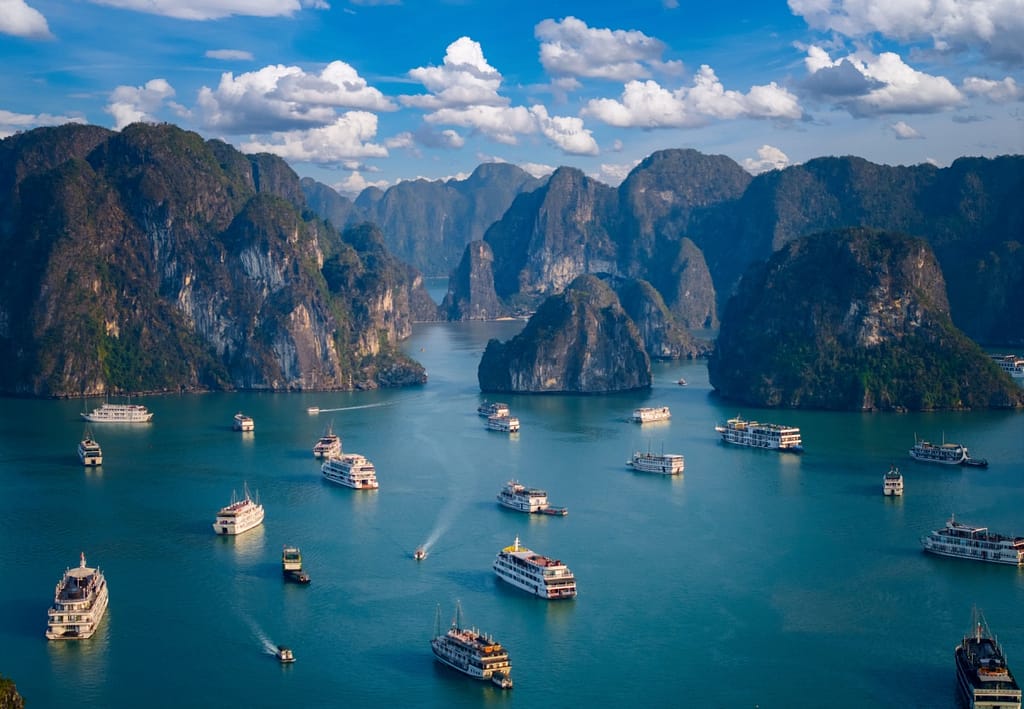
Some destinations hand you great photographs. Vietnam is not one of them. It’s layered, fast-moving, and almost aggressively alive — a place where the visual culture hits you so hard and so fast that your first instinct is to start shooting immediately just to keep up. That instinct is almost always wrong. The best images Vietnam has to offer aren’t hunted down. They’re waited for. Anthony Schiliro’s time there reshaped how he thinks about candid photography — less as a set of techniques and more as a way of being present in a place long enough for it to show you something true.
Why Vietnam Is Unlike Anywhere Else to Photograph
Nothing quite prepares you for the sensory weight of it. Color, motion, noise, the smell of street food and engine exhaust and river water all at once. Markets open before most travelers have had their first coffee, filling with vendors and motorbikes and locals running through routines that feel ancient and unhurried even in the middle of all that noise. Every corner looks like a photograph. Which is part of the problem.
The temptation to shoot everything immediately is real, and it produces mediocre work almost every time. Vietnam rewards the photographer who stops, watches, and resists the urge to fill a memory card in the first hour. Anthony Schiliro’s instinct to focus on daily life over landmarks — the quiet corners, the ordinary transactions, the overlooked texture of a place — fits Vietnam particularly well. The country has no shortage of famous viewpoints. But its real visual life happens somewhere else entirely.
What Patience Actually Looks Like in Practice
Arriving early matters. Places like Hoi An’s central market or Hanoi’s Old Quarter have a quality in the hour before tourist foot traffic arrives that disappears completely by mid-morning. The light is softer. People are less guarded. The scene belongs to them, not to the cameras.
Staying in one spot and letting things come to you is harder than it sounds but consistently more productive than moving through a place trying to capture it all. A nod, a few minutes of simply existing in the same space as someone before raising a camera — that’s not a trick. It’s basic human respect, and people feel the difference.
The candid portrait isn’t something you take. It’s something that becomes available to you after you’ve earned a certain kind of invisible presence in a room.
The Practical Side — Settings, Light, and Approach
Vietnam’s early morning light, especially near water or inside the narrow alleyways of its older districts, is short-lived and extraordinary. Soft, directional, and gone by the time most people are out walking around. You have to be there before it disappears.
A smaller, less conspicuous camera genuinely changes how people behave around you. Big gear signals an event. Smaller gear signals a person. Stick to one focal length and resist swapping lenses mid-scene — it interrupts the rhythm and tells everyone nearby that something deliberate is happening. Zone focusing or manual focus keeps up better in fast-moving market environments than autofocus, which tends to hesitate at exactly the wrong moment.
The overlooked shot is almost always the better shot. Hands sorting produce at 6am. A vendor counting change with practiced indifference. A child watching the street from a doorway. That’s where the real photographs are.
The Lesson Vietnam Keeps Teaching
Vietnam has a way of humbling photographers who arrive with a plan. The country’s visual life doesn’t unfold where you expect it to, and it doesn’t wait around while you get organized. For Anthony Schiliro, the time spent there reinforced something he now carries into every destination: the camera should follow your attention, not the other way around. Patience in travel photography isn’t a personality trait or a stylistic preference. It’s the actual practice. And the images worth keeping from Vietnam are almost never the ones you went looking for.
Leave a Reply