
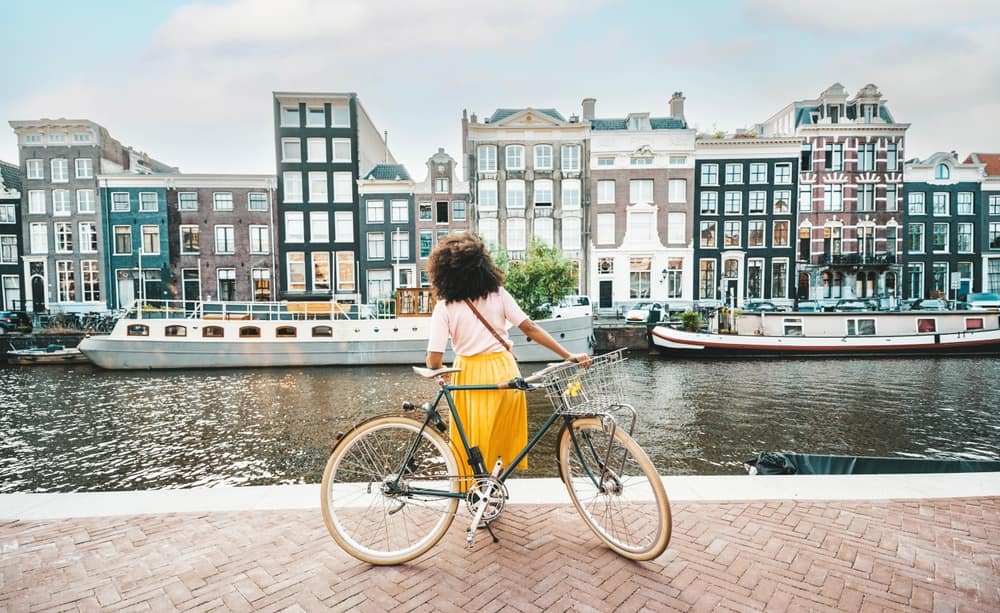
The first hour in an unfamiliar city is the hardest one for a travel photographer. Everything looks like a photograph. The light is new, the streets are disorienting, and there’s a specific kind of anxiety that comes with knowing you only have a finite amount of time before you have to leave. The instinct is to start shooting immediately — to get something before the moment passes. Anthony Schiliro has felt that instinct in cities across five continents, and he has learned, through a fair amount of trial and error, to ignore it. What you do in the first hour, and the first day, determines almost everything about the quality of work you come home with.
Put the Camera Away First
This is the hardest advice to follow and the most consistently useful. When Anthony Schiliro arrives somewhere new, the camera stays in the bag for at least the first hour. Walk the neighborhood. Sit somewhere and order something. Watch how people move through the space around you — what they’re doing, where they’re going, what the rhythm of the place actually is. The city is telling you something in that first hour. You can’t hear it if you’re already shooting.
The photographs you take before you understand a place tend to look exactly like that: photographs taken before you understood the place. Generic, surface-level, interchangeable with a thousand images already on the internet. The ones worth keeping almost always come later, once you’ve started to get a feel for what’s actually here.
Resist the Obvious Shot
Every city has a version of itself that exists on postcards, travel blogs, and the first page of search results. That version is fine. It’s just not interesting, and it’s definitely not yours. The famous viewpoint, the iconic landmark, the neighborhood everyone tells you to visit — these are starting points at best, and traps at worst.
The more useful question to ask in any unfamiliar city is: what does this place look like when it isn’t performing for visitors? That answer usually lives in the early morning, in residential areas one or two streets removed from the main tourist corridor, in the spaces between the things marked on the map. Go there first. The postcard version will still be there later if you want it.
Find Your Anchor and Work Outward
Rather than trying to cover as much ground as possible, pick one neighborhood and stay in it. Walk every street. Come back to the same corner at a different hour. Notice what changes and what doesn’t. Anthony’s best work from unfamiliar cities has almost always come from this kind of focused, repetitive exploration rather than trying to see everything at once.
An anchor spot — a market, a square, a café with a good sight line to the street — gives you somewhere to return to and something to compare. The second visit to the same place almost always produces better images than the first, because you already know where the light falls and what the scene looks like when nothing interesting is happening. That baseline makes it obvious when something worth shooting finally arrives.
Shoot at the Edges of the Day
Golden hour is golden for a reason, but the more underrated windows are the thirty minutes before full sunrise and the period just after sunset when the light goes flat and blue and strange. Cities look completely different at those hours. The crowds are thinner, the mood shifts, and the quality of available light rewards a photographer who’s willing to set an early alarm or stay out past dinner.
In practical terms: be somewhere specific before the light arrives rather than scrambling to find a location once it’s already happening. Scout in the middle of the day when the light is harsh and largely unusable. Use that time to find the spots you want to be standing in when the light turns.
Let the City Surprise You
The best thing an unfamiliar city can do is confuse your expectations. A wrong turn, a street that wasn’t on the map, a neighborhood that looked unremarkable from the outside and turned out to be full of something you didn’t anticipate — these are not inconveniences. They’re the whole point. Travel photography at its best is responsive rather than planned. You bring a set of instincts and a willingness to follow your attention, and then you let the place do the rest.
Anthony has found this to be true whether he’s navigating Osaka for the first time or arriving in a city where he doesn’t speak a word of the language. The city always has an opinion about what’s worth photographing. The job is to be quiet enough to hear it.
About Anthony Schiliro
Anthony Schiliro is a travel photographer who has spent years building a body of work across five continents — from the ancient streets of Sicily to the dense urban landscapes of Hong Kong, from the early morning markets of Vietnam to the coastal cliffs of Brazil. His photography is shaped by a deep interest in philosophy, literature, and cinema, and guided by a single conviction: that the most honest images of a place come from slowing down, paying attention, and resisting the version of the world that already exists on a postcard. When he isn’t traveling, he’s reading — usually something by Camus, Kafka, or Vonnegut — and finding, more often than not, that the best photography advice was never about photography at all.
Leave a Reply